

Creating the GS1 2D code and placing it on packaging
The data content of the GS1 2D code is based on the GS1 Digital Link standard, which defines what information the code can contain and in what format and order it is presented. The standard ensures that the information is identifiable and interpreted consistently across different systems and between different parties. Therefore, it is important that the code marking is implemented correctly.
Selecting a barcode generator
A significant advantage of GS1 standards is that they are open and available to everyone. This means, among other things, that a standard-compliant QR code marking can be created using several different barcode generators.
However, it is important to ensure that the code marking generated by the tool corresponds exactly to the intended data content and structure. Some barcode and QR code generators, especially free versions, may add, remove or modify the data content, which results in incorrect codes that do not function in the supply chain.
For this reason, the GS1 2D code should be carefully tested before deployment – using different readers and in different scanning situations. It is important that the code works reliably at POS (point of sale) terminals, with various barcode scanners, and with consumers’ smartphone cameras.
Placing the GS1 2D code on packaging
The placement of the GS1 2D code on packaging is crucial both for smooth scanning at the checkout and for consumer communication. The code should be placed in a location where it is easily noticeable and readable throughout the product’s entire lifecycle, preferably on a flat surface without folds, seams or strong shapes that could impair readability. Placement should also avoid the edges of the packaging and areas exposed to wear, dirt or labels.
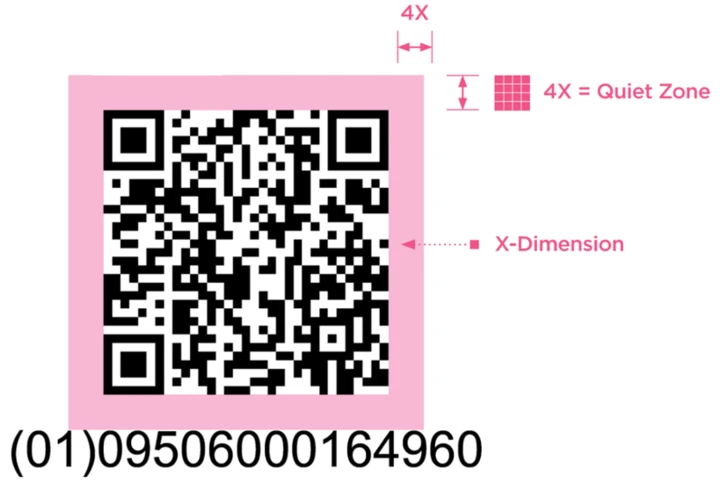
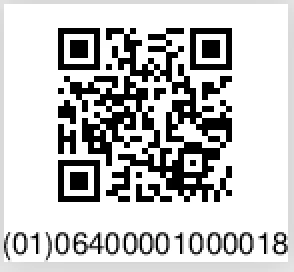
The product’s GTIN must be displayed as Human Readable Interpretation (HRI) alongside the GS1 2D code. The GTIN and its application identifier are placed below the GS1 2D code in a standard-compliant format. The plain text serves as a backup system, for example, for manual entry of the code.
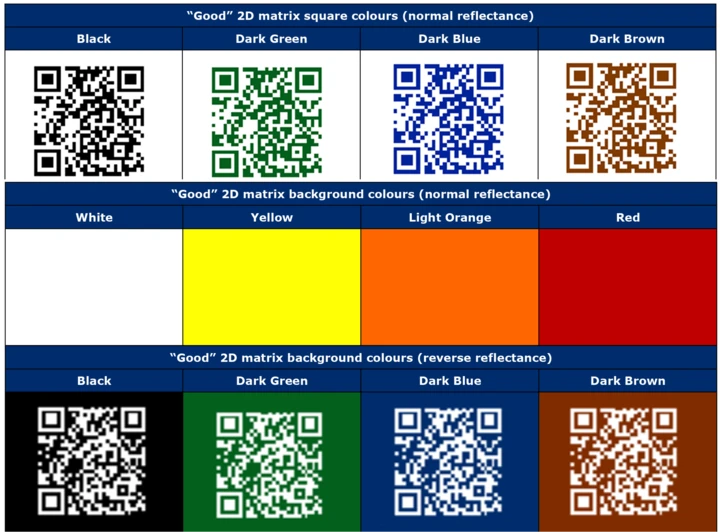
A light background and a dark barcode symbol are the safest choice, while low contrast, metallic surfaces, patterned backgrounds and certain colour combinations can weaken readability. Adequate quiet zones must be left around the GS1 2D code, and the code must not be distorted, stretched or reduced too much in size. In addition, the printing technology, material and finishing must support code quality so that it functions flawlessly throughout the supply chain and on different reading devices.

Printing or marking the GS1 2D code on packaging
The data content of the GS1 2D code determines how and at what stage the code is produced. A GS1 2D code containing only a GTIN can be pre-printed on the packaging in the same way as an EAN barcode. Serialised codes can also be printed in advance, but their use usually requires activation on the production line. If the code contains batch or date information, it must be possible to print it at the time the information is created for the product, for example on the production or packaging line.